
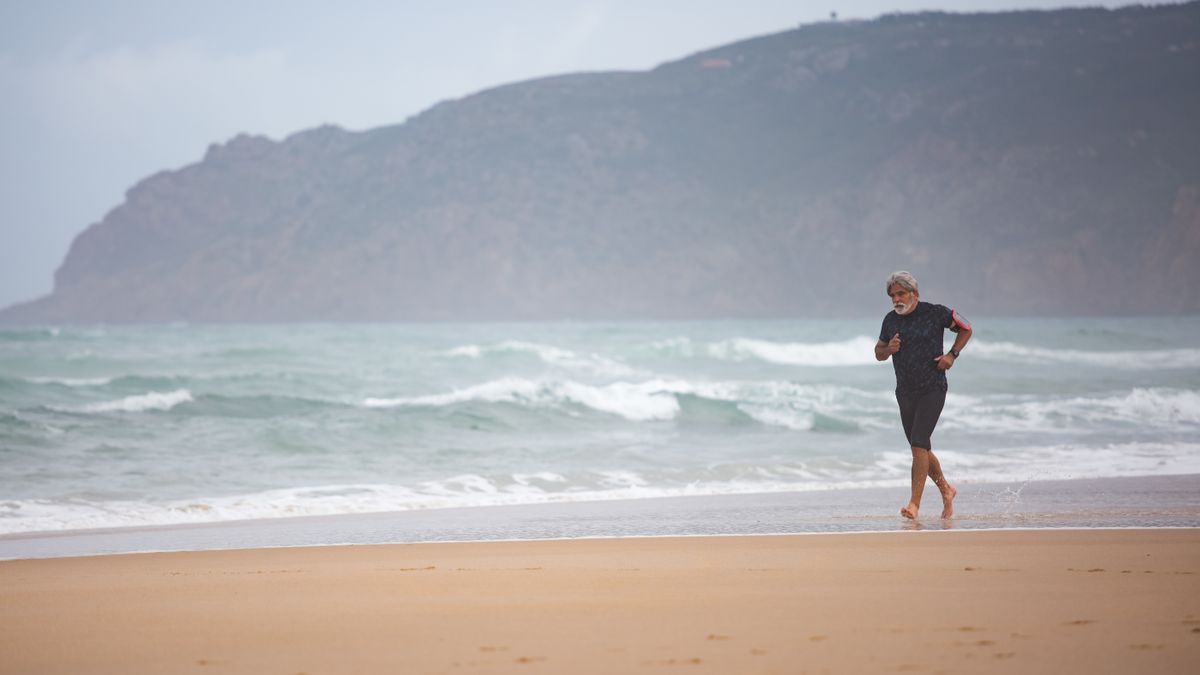
Barrow-in-Furness has something most runners have to travel for: a coastline that begins at the edge of town. From the docklands at the southern end of Barrow you can be on firm, uninterrupted path within ten minutes of the town centre, heading east along the Channel towards Rampside and the causeway out to Roa Island. It is flat enough for tempo work, broken enough in places to build strength, and quiet enough on a weekday morning that the sea wall often belongs to you alone.
The peninsula also gives you choices. You can run out and back along the coast, loop inland through the lanes, or cross to Walney and take in the long, steady drag up towards Biggar Bank. That flexibility matters when you are building a weekly routine rather than peaking for a single race.
Start near the dockland car parks at the southern edge of town and pick up the shoreline path heading east. The opening kilometre is a gentle warm-up on tarmac, passing the old dock basins before the path narrows and the water opens out on your left. Follow the sea wall through to Rampside, where the route swings onto quieter road before reaching the causeway.
Crossing the causeway to Roa Island is the highlight. It is short, exposed and slightly raised, with Piel Island and its castle sitting out to the south and the Lakeland fells framed behind you on a clear day. Touch the far end, turn around, and you have a tidy out-and-back of roughly 16 kilometres, or 10 miles if you prefer the older arithmetic.
If you want more, continue past Rampside and loop back through the lanes towards Dalton, adding distance without adding traffic.
Road shoes are fine for the coastal stretch in all but the wettest weeks. If you are heading onto the inland lanes in winter, a shoe with a little more tread will pay for itself in confidence.
The out-and-back shape makes pacing simple. For an easy day, run 45 to 60 minutes and turn at the halfway point, keeping the effort conversational throughout.
This is a westerly coastline and it shows. Wind is the single biggest factor in how a session here feels, so check the forecast and, where you can, run the outward leg into it and enjoy the tailwind home. On gusty days the causeway is the place to be cautious; there is no shelter and the surface can be slippery after rain.
The tide rarely affects the path itself, but it does change the look of the run entirely, and high water against a strong onshore wind can send spray across the sea wall. A light, windproof layer is worth carrying from October through to March. In summer, the section between the docks and Rampside has almost no shade, so take water for anything over an hour.
Barrow and the surrounding villages have a running community that punches well above its size. Local clubs meet through the week for interval sessions, social runs and beginner-friendly groups, and the athletics track hosts regular speed work for anyone wanting structure. If you are new to the area, turning up to a Tuesday evening session is the quickest way to find training partners who know every lane on the peninsula.
The fixture list stays busy too, with a spring half marathon, summer 10K races and a steady calendar of fell and trail events across the Furness area. Marshals are always needed, and volunteering is a good way to meet people before you commit to a club membership.
Wherever you are in your training, the coast from Barrow to Roa Island offers something rare: a route you can use for a recovery jog, a hard tempo or a long Sunday effort, all within a few miles of home. Lace up, head for the water, and let the peninsula do the rest.

Hi, my name is Anthony kuber. I am artist and fashion designer.
I love to travel and writing blogging.
Your email address will not be published. Required fields are marked *
Software Developer & Writer
Hey, I'm Diva, a developer and writer blending code and creativity. I'm driven by a deep curiosity and a relentless pursuit of excellence. Join me as I craft digital solutions and captivating stories.


